
How to choose a painter in Melbourne (an honest checklist)
Tricoat Painting · 26 June 2026 · 8 min read
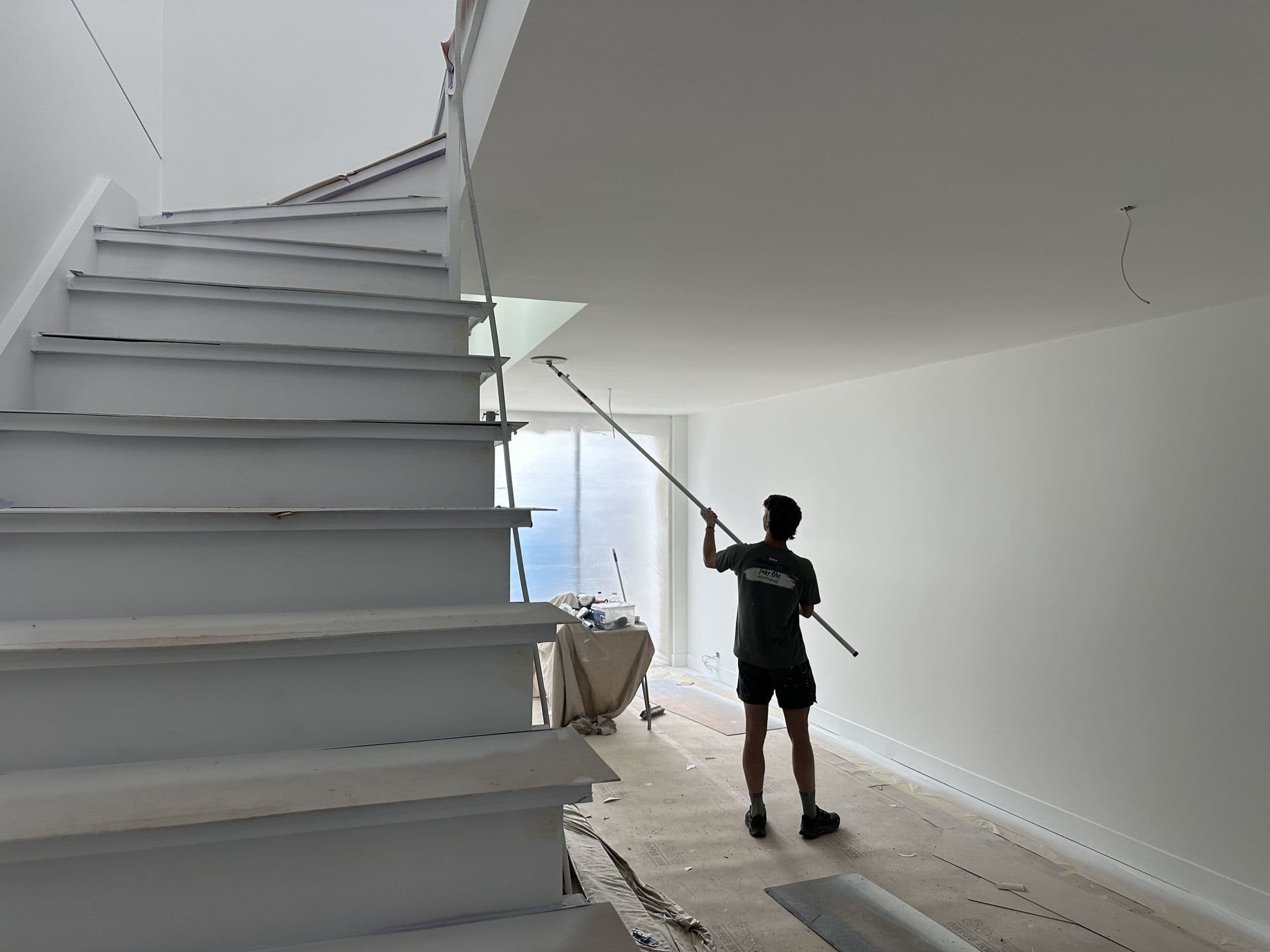
Choose a painter on the paperwork, not the headline price: a fixed, itemised scope that spells out the prep, the named paint product and number of coats, proof of insurance, a written warranty, and reviews you can verify. The cheapest quote usually skips preparation — which is exactly why it fails early.
Tricoat Painting · Updated June 2026
The best way to choose a painter in Melbourne is to ignore the headline price until you've read everything above it. A quote that spells out the preparation, names the paint and the number of coats, carries real insurance and puts a warranty in writing will almost always outlast a cheaper one-liner — because the gap between quotes is nearly always the prep, and prep is what decides whether a paint job lasts.
We're painters, so read this knowing exactly where it comes from. But we've walked into too many homes to quote the repair of a two-year-old paint job that should have lasted ten, and the story never changes: the scope was vague, the preparation was skipped, and nobody was answerable when it failed. Here's the checklist we'd hand a mate. It holds up whether or not you ever call us.
Start with the paperwork, not the price
A proper quote is a scope of works, not a number in a text message. Any quote worth signing puts the whole job in writing: the exact areas and surfaces, the preparation step by step — wash, scrape, fill, sand, prime — the paint brand and product on each surface, the number of coats, the timeline, a fixed GST-inclusive total, and the warranty terms. Likely extras get flagged upfront, so nothing ambushes you halfway through.
When two quotes land thousands apart, that paperwork is how you find out why. Line them up. Does the cheaper one wash and sand, or just "paint"? Two topcoats, or one? A named washable product on the walls, or "paint as required"? Almost every time, the missing money is missing preparation.
Red flags in a painting quote
- A vague scope. "Paint interior" or "paint house" with no rooms, surfaces or prep steps listed. Vague scopes are where variations breed — you can't hold anyone to a line that was never written down.
- A big deposit. Deposits should be modest, with payments tied to progress as the work is delivered. A painter who wants a large sum before a drop sheet is laid is funding something other than your job.
- No preparation itemised. If washing, filling, sanding and priming aren't written down, they usually aren't happening. That's most of the labour on a proper job — and the reason the cheap version peels early.
- No named product or coat count. "Quality paint" means nothing on paper. The brand, the product line and the number of coats belong in the quote, or the quotes can't be compared at all.
- Nobody can tell you who's coming. Ask whether it's the painter's own trained crew or whoever was available that week. We only ever put our own crew on a job — you should know who's working in your home.
- Pressure to sign today. A fair price survives a week of thinking. Urgency is a sales tactic, not a trade practice.
The insurance and warranty questions
Two questions sort serious painters from the rest, and neither is rude to ask. First: "Are you insured, and can I see it?" A professional outfit carries public liability insurance and workers' compensation, and can show a current certificate without being chased. If a ladder goes through a window — or someone is hurt on your property — that certificate is what protects you.
Second: "What's your warranty, and is it in writing?" A written workmanship warranty covers peeling, flaking or blistering caused by the preparation or the application — in Australia these typically run around five years — and it sits alongside the paint manufacturer's own product warranty, which on quality exterior systems can extend up to around ten. Ask for both sets of terms before work starts. A painter who trusts their prep will happily put years on paper. A painter who doesn't will change the subject.
Why prep hours decide how long it lasts
The trade secret that isn't a secret: paint is the cheap part of painting. On a job done properly, the bulk of the hours go into what happens before the colour — washing surfaces back to something sound, scraping and sanding every failing edge, filling and caulking, treating stains and rot, priming the bare patches. Do those hours and a quality exterior system holds for around seven to ten years. Skip them and the same tin of paint lets go in a couple of winters.
Indoors the failure is quieter but just as certain — unsanded patches flashing under downlights, hairline cracks reopening, old marks bleeding through the new coat. You deserve a paint job that stands the test of time, and that test is run in the prep hours, not the topcoat. When you compare painters, prep hours are what you're actually buying.
Check the work, not just the stars
Reviews matter — read them the way a painter would. Look for detail: did the reviewer mention the preparation, the communication, whether the crew turned up when they said they would and cleaned up after themselves? A dozen specific stories are worth more than a hundred bare star ratings. Make sure the reviews are public, recent and attached to real jobs, and be wary of a business whose reviews can't be found at all.
Then ask to see work — ideally something painted a few years ago, not last month. Fresh paint flatters everyone; a three-year-old west-facing wall tells the truth. A painter proud of their preparation will have addresses to point you to. Our own reviews sit publicly on Google, where we can't edit a word of them — which is exactly how it should be.
Why the cheapest quote usually costs the most
Run the arithmetic on a corner-cut job. If a repaint fails inside a few years, you pay for set-up, access and paint all over again — plus the scraping-off of the failed coat, which makes the second job harder than the first. Work that's prepped properly and holds for seven to ten years costs less per year every single time, and the house looks better for all of them.
None of that makes the dearest quote the right one. The right quote is the one whose price you can trace: these rooms, this preparation, this product, this many coats, this warranty, this crew. When you can see where every dollar goes, you're choosing a painter. When you can't, you're gambling on one.
The checklist, in one place
- Is the scope itemised and fixed — rooms, surfaces, prep steps, product, coats, timeline and a GST-inclusive total?
- Is the preparation written line by line, not buried in "paint as required"?
- Can they show current public liability insurance and workers' compensation?
- Is there a written workmanship warranty, alongside the manufacturer's product warranty?
- Who exactly will be in your home — their own crew, or subcontractors you've never met?
- How are surprises handled — priced and approved in writing before the work, or billed at the end?
- Do the reviews carry real detail, and can they point you to a job that's a few years old?
- Is the deposit modest, with payments staged against progress?
Ask those eight questions of any painter in Melbourne — us included — and the field sorts itself out fast. We've been painting since 2008 from our Thomastown base, and we're glad to be compared line by line on interior, exterior or heritage work, because the comparison is where honest quotes win. If you want to see how the numbers behave before you talk to anyone, start with our house painting cost guide or our interior pricing guide. And when you're ready, book a free measure — we'll put every line above in writing.
Want the real figure for your place?
Published ranges only get you so far. We give a fixed, itemised price after a free on-site measure — no phone ballparks, no surprise variations.
Related services
Sources
Figures are third-party published ranges for budgeting guidance, current when this guide was researched — not a Tricoat quote.
Frequently asked questions
What questions should I ask a painter before hiring them?
What are the red flags in a painting quote?
How much deposit should I pay a painter upfront?
What insurance should a house painter have?
Why are two painting quotes for the same job so different?
Ready for a paint job that lasts?
Free measure across Melbourne's north and east. Honest scope, fair price, no mess left behind.